04/20/2026ESG
Advertising

The physical purity of gold is expressed in carats and describes the proportion of pure gold in an alloy. Certifications ensure that gold bars’ composition does, in fact, measure up to their minted value. But what about purity in terms of ESG criteria? That is why it is all the more important to take into account the origin of the precious metal and the ESG criteria applied in the process.
As the issuer of Xetra-Gold®, Deutsche Börse Commodities GmbH is committed to high standards to ensure that all gold held in its custody is mined responsibly. Its stated goal is to contribute to greater consideration of ESG criteria in the gold market and along the value chain. A sustainability strategy with focus areas in environmental, social and corporate governance matters is integrated into the overarching business strategy.
Since 2020, a declaration of conformity with the 20 criteria of the German Sustainability Code (DNK) is published in the DNK database biannually. In the future, reporting will be supplemented by the voluntary EU standard for sustainability reporting by SMEs, the VSME (Voluntary ESRS for Non-listed Small- and Medium-sized Enterprises). Based on the double materiality assessment, Deutsche Börse Commodities has formulated objectives and measures and assigned them to the respective relevant Sustainable Development Goals (SDGs).
Climate change, with its far-reaching consequences for all areas of sustainability, is one of the greatest challenge of the 21st century. The most serious effects include the destruction of ecosystems and biodiversity, health hazards and an increasing competition for resources. Counteracting efforts require the global participation of policy, business and society. To do its part, Deutsche Börse Commodities holds itself, its suppliers and service providers to high standards.
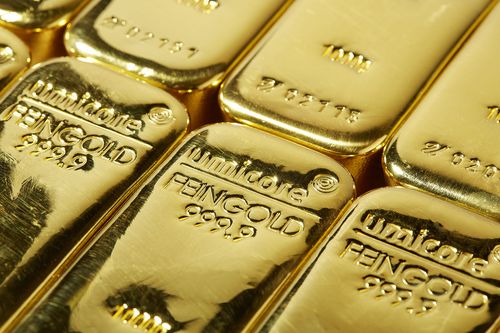
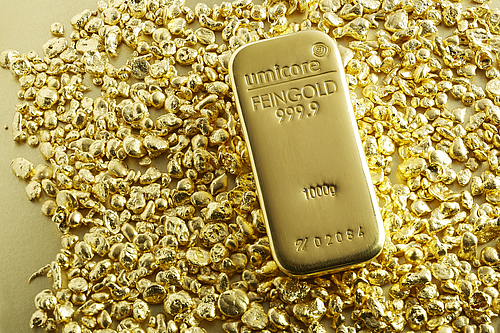
The gold bars for the physically backed Xetra-Gold® security are sourced from our cooperation partner Umicore AG & Co. KG, among others. The bars are produced via an resource-efficient extraction from recycled materials. Since 2025, Deutsche Börse Commodities has supported the non-profit organization ForTomorrow, which reforests mixed forests in Germany to increase CO₂ storage and promote biodiversity. The amount of the donation is based on the company’s calculated greenhouse gas emissions, which arise mainly from the transport of gold.
Deutsche Börse Commodities fully offsets its annual carbon footprint with ForTomorrow, a non-profit organization that reforests climate-resilient mixed forests in Germany to increase carbon storage and promote biodiversity.
Carbon offset certificate 2024
Carbon offset certificate 2025 (in German only)
The Responsible Gold Guidance of the London Bullion Market Association (LBMA) requires Good Delivery refiners to carry out risk-based due diligence on their gold supply chains. Among other things, environmental aspects such as the handling of air, water and soil pollution, water resources and protected areas must be taken into account. As an alternative to mining, gold can be recycled without loss of quality or value, reducing dependence on mines and their impact on nature.
Gold mining can be associated with land use and with adverse effects on ecosystems and water resources. For the physical delivery of Xetra-Gold, Deutsche Börse Commodities GmbH uses bars made from recycled gold by joint venture partner Umicore AG & Co. KG, provided sufficient capacity is available. The gold refinery complies with strict guidelines and laws, such as the requirements of the EU Conflict Minerals Regulation (EU) 2017/821 and the OECD Due Diligence Guidance for Responsible Supply Chains of Minerals from Conflict-Affected and High-Risk Areas. It recovers valuable metals from a wide range of industrial residues and waste products, returning them to the production cycle.
For requirements which exceed these capacities, metal supplies from verified primary sources are used, in compliance with the clearly defined conditions of the Charter for Sustainable Procurement. Further information can be found on the website of Umicore and London Bullion Market Association.
KPIs: 2 managing directors, 0 operating sites
Deutsche Börse Commodities GmbH addresses the ethical challenges surrounding gold trading. Often located in disadvantaged regions of developing countries, gold mines contribute to the economic situation. In particular, work in very small-scale mines can be associated with considerable risks to life and health as well as with precarious economic conditions.
Deutsche Börse Commodities has therefore issued a statement regarding modern slavery and human trafficking and has made a commitment to comply with the principles of the UN Global Compact. When it comes to ESG criteria, the production of new gold bars is governed in particular by the Good Delivery Rules and Responsible Gold Guidance as part of the LBMA’s leading Responsible Sourcing Programme standard. The LBMA’s Responsible Gold Guidance includes, among other things, requirements for managing risks such as forced and child labor, human rights abuses, conflict financing, money laundering and terrorist financing, as well as other ESG factors. LBMA Good Delivery refiners must implement appropriate due diligence processes and have their conformity reviewed annually by independent assurance providers approved by the LBMA. For high-risk supply chains, the Guidance also calls for enhanced due diligence measures, which may include on-site audits. The Xetra-Gold® inventory consists exclusively of bars from strictly regulated and audited mines or recycled gold.
Declaration on Modern Slavery and Human Trafficking (available in German only)
UN Global Compact Commitment (available in German only)
With its product Xetra-Gold, Deutsche Börse Commodities stands for reliability and integrity in gold investing. Product acceptance, customer trust and safekeeping of the precious metal are top priorities. For Deutsche Börse Commodities, responsible communication is based on transparency. As part of its ESG management, it has developed dialogue strategies for its various stakeholders which are regularly updated, adapted and developed. All relevant documents are available online, ranging from the articles of association to a list of all gold bars in storage.
Key information document, Annual reports, the Xetra-Gold prospectus and other documents can be found here.
The financial sector is a highly regulated environment. Companies such as Deutsche Börse Commodities GmbH and their business partners are prone to the scrutiny of policy makers, authorities and the public. As a special purpose entity, it complies with all applicable laws and regulatory requirements. The lean and highly efficient corporate structure of Deutsche Börse Commodities enable short decision-making processes, direct internal communication and close monitoring of key issues, in accordance with the declaration of conformity under the German Sustainability Code (DNK).
ESG responsibility lies with the management and the external ESG officer. The topic of sustainability is an integral part of all supervisory board and shareholder meetings.
The mission statement of Deutsche Börse Commodities GmbH is based on a clear mission and vision as well as shared values. In this way, the company gives investors simple, direct and secure access to the gold market. Its long-term goal is to become the market leader in Europe for gold as an exchange-traded investment product. In doing so, the company acts efficiently and transparently and sees itself as a reliable, fair and approachable partner to investors, employees and service providers. Four core values guide its actions: transparency in communication, diligence in performance, credibility in action and communication orientation in cooperation. These values form the basis for internal collaboration as well as for relationships with customers and partners. In addition, a business code of conduct has been implemented at the company.
Deutsche Börse Commodities aims for fair and collaborative dealings with its suppliers and service providers and expects compliance with all legal requirements. The latter, in turn, acknowledge the adopted code of conduct, which covers ecological and social aspects in addition to economic requirements.
Deutsche Börse Commodities is mindful of its social responsibility. It therefore makes appropriate monetary and in-kind donations to charitable causes and to promote financial education projects. Since 2015, Deutsche Börse Commodities has been regularly supporting ARCHE Kinderstiftung, an organization committed to countering the material and emotional effects of child poverty, with financial donations. Together with their closest external colleagues, the two managing directors also visit the ARCHE annually for a hands-on day of fun and learning. In 2025, a sponsored workshop was held by “Schulgold,” a program for the financial education of children, teenagers and young adults, at a local special education and counseling center.
Grandfathered gold refers to the investment gold such as bars or coins refined before January 1, 2012, held in bullion bank vaults, central banks, exchanges or refineries. It requires no determination of origin. This also includes third-party holdings. While there is no verification of ESG-compliant sourcing for grandfathered gold, Deutsche Börse Commodities GmbH endeavors to pass on all available information.
Refined gold which does not directly originate from a mine is considered recycled gold. In practice, recycled gold is recovered from scrap gold in the form of jewelry or gold bars or from end-user products, scrap and waste metals, or materials generated during refining and product manufacturing. Whenever possible, Deutsche Börse Commodities GmbH aims to use bars cast from recycled gold. Its primary partner in this endeavor is Umicore AG & Co. KG, a company specialized in state-of-the-art recycling technologies.
In urban mining, gold is extracted for recycling purposes from smartphones, tablets, PCs and motor vehicles, i.e. sources found in high concentrations, particularly in urban regions. In terms of growth potential, urban mining is currently the most promising area of recycling. The recycling rate of scrap gold, such as jewelry, is already at 100 percent.
There is simply not enough recycled gold available on the market for the purpose of physically backing the Xetra-Gold® bearer